Running out of tiles mid-project is one of the most avoidable and frustrating DIY mistakes. You stop work, the batch is discontinued, or the new delivery doesn't match. The fix: calculate correctly before you buy.
This guide covers every variable (room area, tile size, grout joints, waste allowance and pattern type) so you order exactly the right amount the first time.
What You Need Before You Start
Gather these details before calculating:
From the tile packaging
- Tile dimensions: length × width (e.g. 600 × 300 mm or 24" × 12")
- Tiles per box: how many tiles are in one carton
- Coverage per box: often printed as m² or ft² (use this if available)
- Recommended grout joint width: usually 2–5 mm for floor tiles, 1.5–3 mm for wall tiles
From the room
- Total area to be tiled (floor, wall, or both)
- Obstacles to subtract: bath tub, shower tray, kitchen island. Only subtract large fixed items you are certain will not move
- Number of cuts: more corners, niches and pipes = more waste
Step 1: Measure Your Area
Simple rectangular rooms
Area = length × width
Metric example: 3.2 m × 2.8 m = 8.96 m²
Imperial example: 10.5 ft × 9 ft = 94.5 ft²
L-shaped rooms and irregular spaces
Divide the space into rectangles, calculate each separately and add them together. This approach also helps you plan tile layout for each zone independently.
- Zone A: 3.0 m × 2.0 m = 6 m²
- Zone B: 1.5 m × 1.2 m = 1.8 m²
- Total: 6 + 1.8 = 7.8 m²
Wall tiling
For each wall: width × height. Subtract windows and doors if they are large, but keep small sections like the area above a window unless it is more than 0.5 m².
Step 2: Calculate How Many Tiles
Tile area (if not printed on the box)
Tile area (m²) = (tile length in m) × (tile width in m)
Example: 600 mm × 300 mm = 0.60 m × 0.30 m = 0.18 m² per tile
Tile area (ft²) = (length in inches × width in inches) ÷ 144
Example: 24" × 12" ÷ 144 = 2.0 ft² per tile
Raw tile count (before waste)
Tiles needed = total area ÷ area per tile
Example: 8.96 m² ÷ 0.18 m² = 49.8 → round up to 50 tiles
Skip the manual math: use the tile calculator
Enter your room dimensions and tile size. Get an instant tile count, box count and cost estimate in metric or imperial.
Open Tile CalculatorStep 3: Add Waste Allowance
No room tiles perfectly without cuts. Every cut produces off-cuts, and some break during installation. Use these benchmarks:
| Situation | Waste % |
|---|---|
| Simple rectangular room, straight lay, large tiles | 5–7% |
| Standard room with a few cuts (doors, alcoves) | 8–10% |
| Complex room, many obstacles, smaller tiles | 10–15% |
| Diagonal or herringbone pattern | 15–20% |
| Natural stone with pattern matching | 20%+ |
Tiles with waste = raw count × (1 + waste %)
Example: 50 tiles × 1.10 = 55 → round up to 55 tiles
Step 4: Account for Grout Joints
Grout joints take space. For large-format tiles (600 mm+), this has minimal impact. For smaller mosaic or subway tiles, grout can noticeably affect how many full tiles fit across a row.
Effective tile size (with grout)
Effective tile length = tile length + grout joint width
Example: 300 mm tile + 3 mm joint = 303 mm effective size
Use the effective tile size when planning layout and confirming that full tiles fit without awkward slivers at the edges.
Patterns: Offset, Diagonal & Herringbone
Straight lay (grid pattern)
Tiles align in rows and columns, joints lined up. Most efficient layout, minimum waste. Standard choice for large floors and walls.
Offset (brick bond / running bond)
Each row is shifted by half a tile length (or one-third). Very common for subway tiles and rectangular tiles. Waste: 8–10%. Note: an uneven subfloor must be levelled before tiling — offset bond does not compensate for this, and with larger tiles can actually make lippage more visible.
Diagonal (45°)
Tiles are rotated 45° to the walls. More cuts at every perimeter wall and around all obstacles. Makes a room feel wider. Waste: 15–20%. Requires careful planning to keep diagonal lines even.
Herringbone and chevron
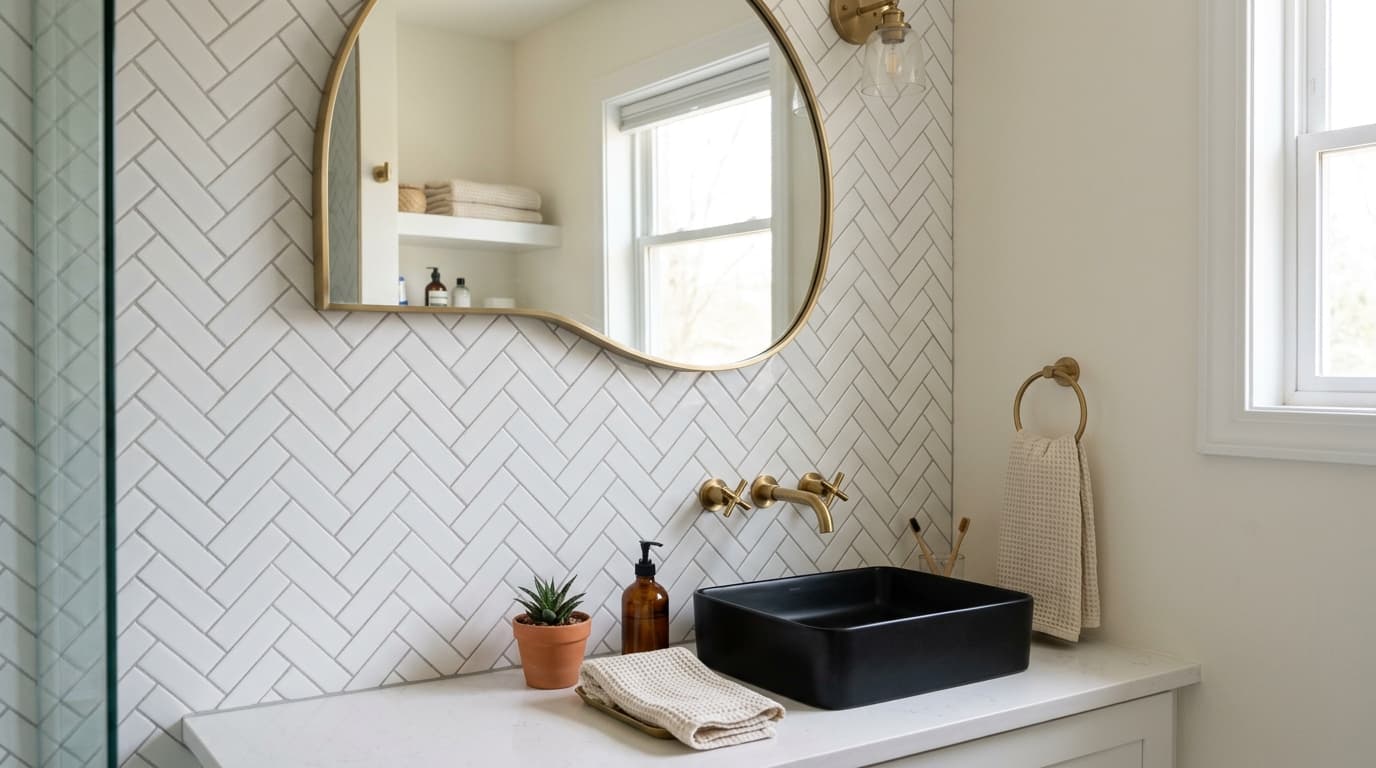
Tiles are set in a V-shaped zigzag pattern. Requires many more cuts, especially at borders. Best suited to rectangular tiles (2:1 or 3:1 ratio). Waste: 15–20%, sometimes more in small spaces or around fixtures.
Wall Tiles vs. Floor Tiles
The calculation method is identical, but a few things differ:
- Wall tiles are typically lighter and thinner. Do not use wall tiles on floors, they will crack under foot traffic
- Gravity affects layout: plan where you want full tiles to show (eye level, focal walls) and where cut tiles can hide (behind toilets, in corners)
- Fixtures break rows: taps, switches and soap holders all require precise cuts, so add at least 5% extra for complex bathrooms with many fittings
- Measure height carefully: ceiling heights vary, always measure at the highest point of each wall
6 Mistakes That Lead to Re-Ordering
1. Measuring only the easy walls
Most people measure length and width and forget alcoves, chimney breasts and bay windows. Measure every section separately.
2. Skipping waste allowance
A calculation with zero waste assumes perfect tiles and no cuts. Even professional tilers use at least 5%.
3. Forgetting grout when planning layout
Grout joints push tiles apart. Ignoring this leads to unexpected slivers at the end of a row.
4. Mixing batches mid-project
Tiles from different production batches can look noticeably different in certain lighting. Always buy all tiles in one order from one batch.
5. Not ordering spare tiles
Even after a successful installation, keep 5–10 spare tiles. Matching a discontinued tile 3 years later is almost impossible.
6. Using floor tile quantities for wall tiles (or vice versa)
If you are tiling both floor and walls, calculate them separately. Tile sizes, grout widths and waste percentages often differ between the two surfaces.
Quick Reference Summary
| Step | Formula |
|---|---|
| Room area | length × width |
| Tile area | tile length × tile width (in same unit) |
| Raw tile count | room area ÷ tile area → round up |
| With waste | raw count × (1 + waste %) → round up |
| Boxes needed | total tiles ÷ tiles per box → round up |
Ready to get your exact tile count? Use our tile calculator: enter your room size, tile dimensions and pattern type for instant results in metric or imperial.