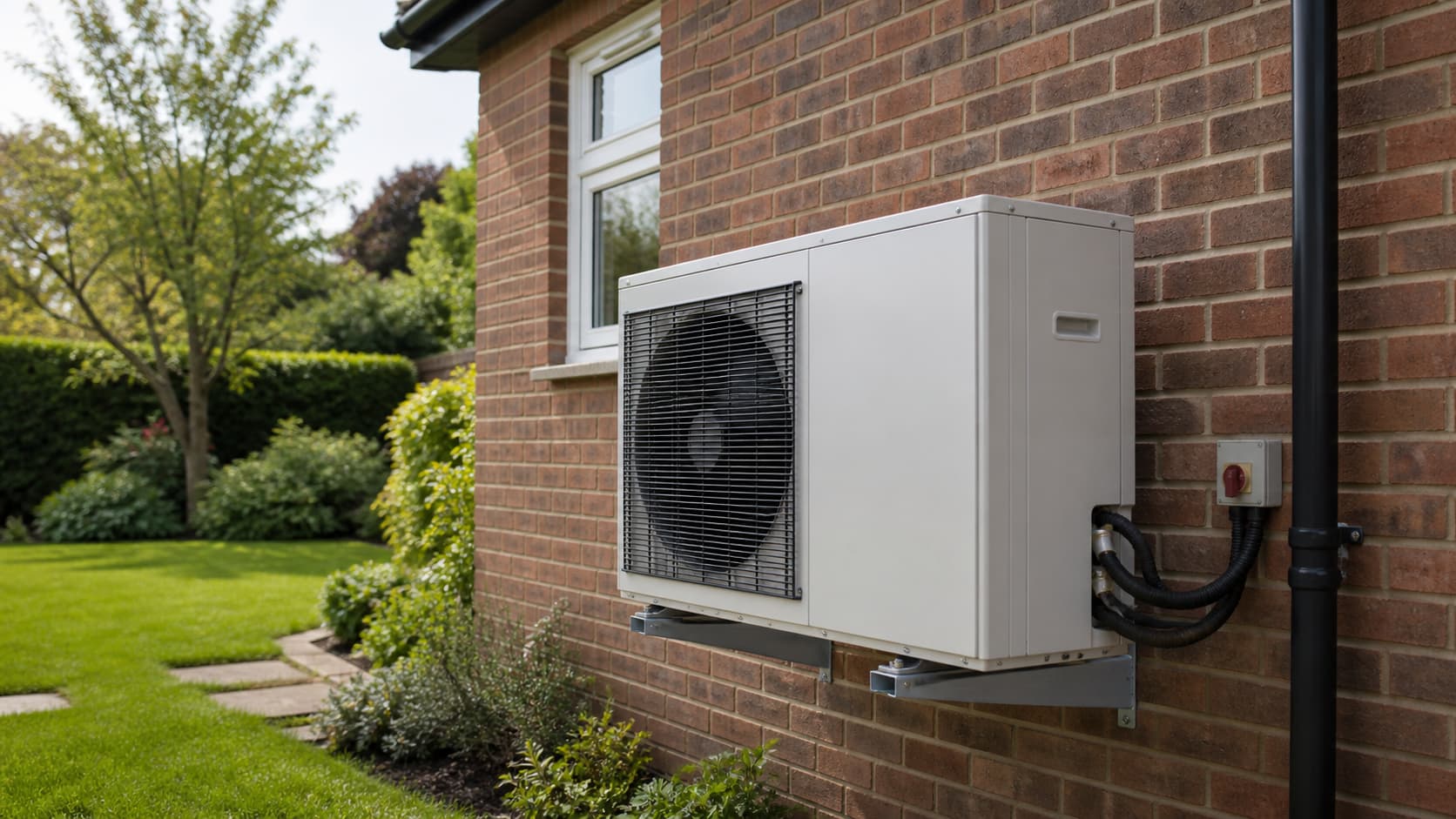
A heat pump is one of the largest upfront energy investments a homeowner can make. But it is also one of the few that genuinely pays back over time, if the conditions are right. The key question is not whether heat pumps work. They do. The question is whether the numbers work for your specific home.
This guide breaks down the real costs, realistic savings, available grants and how to calculate whether a heat pump makes financial sense for you.
How a Heat Pump Saves Money
A heat pump doesn't generate heat by burning fuel. It moves heat from outside air (or the ground) into your home. For every 1 kWh of electricity it consumes, a modern air source heat pump delivers 2.5–4 kWh of heat. This ratio is called the Coefficient of Performance (COP).
If your current boiler burns gas at 90% efficiency and you replace it with a heat pump running at COP 3.0, you are getting three times more heat per unit of energy input. Even accounting for electricity being more expensive per kWh than gas, the net saving can be significant, though the result depends heavily on what fuel you are replacing and the electricity-to-gas price ratio in your market.
Upfront Cost and What Affects It
The installed cost of an air source heat pump in the UK typically ranges from £8,000 to £15,000. Ground source systems cost more (£15,000 to £25,000) but deliver higher efficiency. The variation comes from several factors:
- System size: a 5 kW unit for a small home costs less than a 12 kW unit for a large one
- Radiator upgrades: heat pumps run at lower flow temperatures than boilers, so oversized radiators or underfloor heating improve efficiency. Upgrading radiators adds £1,000–£4,000
- Hot water cylinder: if you don't have one, add £500–£1,500
- Insulation standard: a poorly insulated home loses heat faster than the pump can replace it. Insulating before installation increases upfront cost but dramatically improves payback
- Installation complexity: older homes or complex layouts cost more to retrofit
| Component | Typical cost (UK) |
|---|---|
| Air source heat pump unit + installation | £8,000–£12,000 |
| Radiator upgrades (if needed) | £1,000–£4,000 |
| Hot water cylinder (if needed) | £500–£1,500 |
| Controls and thermostat | £200–£600 |
| Total before grants | £9,700–£18,100 |
Annual Savings: Real Numbers
Annual savings depend on what you're replacing, your home's heat demand and the efficiency of the heat pump in your climate. Here is a realistic worked example for a typical 3-bedroom semi-detached UK home:
| Scenario | Annual heating cost |
|---|---|
| Gas boiler at 90% efficiency (£0.065/kWh gas, 15,000 kWh heat demand) | £1,083/year |
| Heat pump at COP 2.8 (£0.28/kWh electricity) | £1,500/year |
| Heat pump at COP 3.5 (£0.28/kWh electricity) | £1,200/year |
| Oil boiler at 85% efficiency (£0.09/kWh oil) → heat pump COP 3.0 | Saves ~£600/year |
| LPG boiler (£0.14/kWh) → heat pump COP 3.0 | Saves ~£1,100/year |
Calculate your heat pump payback
Enter your current heating fuel, annual usage and system cost. Get payback period, annual savings and 20-year net return instantly.
Open Heat Pump ROI CalculatorGrants and Incentives
Government grants significantly change the financial picture. In England and Wales, the Boiler Upgrade Scheme (BUS) currently offers £7,500 off the cost of an air-to-water or ground source heat pump. Similar schemes exist across Europe:
- UK (England & Wales), Boiler Upgrade Scheme: £7,500 for air-to-water and ground source heat pumps (Scotland and Northern Ireland have separate schemes)
- Germany, BEG subsidy: up to 70% of installation cost depending on income and home age
- France, MaPrimeRénov': up to €5,000 for heat pump installation
- Norway, Enova: up to NOK 20,000 for air-to-water heat pumps, up to NOK 40,000 for ground source (check enova.no for current rates as amounts are updated regularly)
- US, Inflation Reduction Act: up to $2,000 tax credit for heat pump installation
Always check the current scheme in your country before calculating, as grants change frequently and eligibility criteria vary.
Payback Period and 20-Year Return
The payback period is the most useful metric for evaluating a heat pump. Use this formula:
Payback (years) = Net installation cost ÷ Annual saving
But payback alone doesn't tell the full story. A heat pump that takes 12 years to pay back but lasts 20 years still delivers 8 years of free heating, which is a meaningful return. Here are three scenarios:
| Scenario | Net cost | Annual saving | Payback | 20-yr net |
|---|---|---|---|---|
| Replace oil boiler, good insulation, UK grant | £5,000 | £700/yr | 7 years | +£9,000 |
| Replace gas boiler, average insulation, UK grant | £5,500 | £200/yr | 27 years | −£1,500 |
| Replace LPG boiler, good insulation, no grant | £11,000 | £1,100/yr | 10 years | +£11,000 |
The middle scenario (replacing gas without a grant and with average insulation) illustrates why heat pumps are not a universal financial win. Context matters enormously.
When a Heat Pump Makes Financial Sense
A heat pump is most likely to deliver a strong ROI when:
- You are replacing oil, LPG or electric storage heaters. The running cost saving is immediate and significant.
- Your home is well insulated, or you insulate before installation. Poor insulation forces the pump to work harder, reducing COP and savings.
- You qualify for a government grant. This alone can cut payback from 20 years to 7–10.
- You have or are installing underfloor heating. Heat pumps run most efficiently at lower flow temperatures, which UFH is designed for.
- You pair it with solar panels. Running the heat pump on self-generated electricity dramatically improves the economics.
- Electricity prices in your market are less than 2.5× gas prices. The closer this ratio is to 1:1, the better the heat pump economics.
Run your own numbers
Enter your current fuel type, system cost and annual usage. The calculator outputs payback period, annual savings and 20-year net return, with and without grants.
Heat Pump ROI Calculator