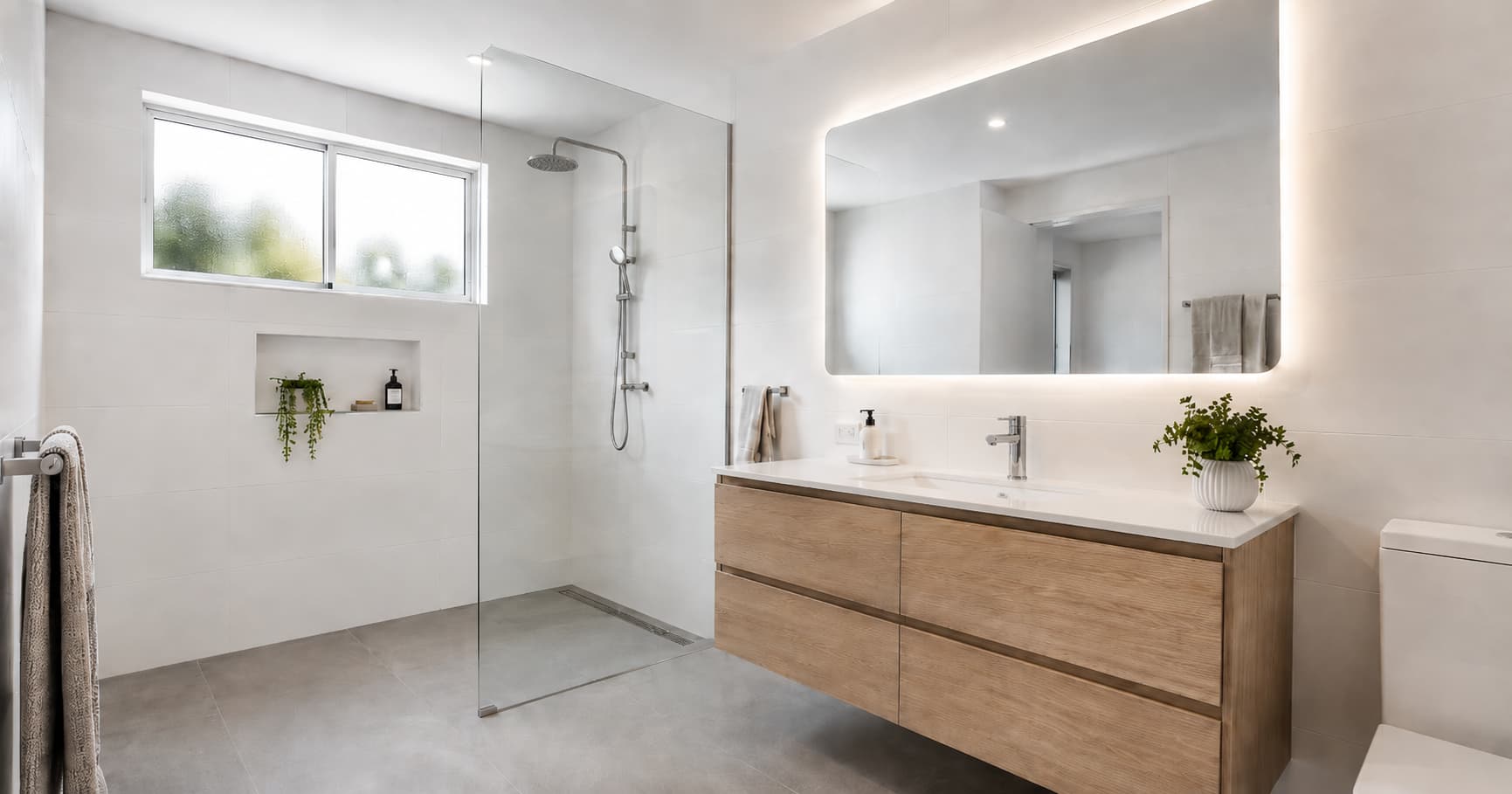
Bathroom renovation quotes are all over the place. One contractor says USD 8,000, another says USD 22,000 for what sounds like the same job. The difference is rarely dishonesty. It comes down to what is included, where the plumbing goes, what tiles you pick, and how much of the existing layout stays intact.
This article breaks down where the money goes: the numbers you need to build a realistic budget before you speak to anyone.
What affects the cost most
Three things drive bathroom renovation costs more than anything else: whether you move the plumbing, what fixtures you choose, and local labour rates.
Moving a toilet, basin, or shower to a new position requires rerouting drain pipes, which is expensive and invasive. Keeping the existing layout and dropping in new fixtures is far cheaper. Many renovations that look completely different from before cost a fraction of what people expect, because the plumbing stayed in the same place.
Fixtures vary enormously in price. A wall-hung toilet and concealed cistern costs several times more than a standard close-coupled toilet with identical function. A freestanding bath adds cost for both the product and the additional plumbing work to reach it. These are style choices, not performance ones. Set your fixtures budget before you start choosing products.
Labour rates vary by country, city, and contractor. In major cities in the US, UK, or Australia, labour accounts for 40 to 50% of the total renovation cost. In lower-cost regions the figure is closer to 30%. Get at least two quotes from local tradespeople before settling on a budget figure.
Cost ranges by renovation scope
The figures below are broad reference ranges only. Labour costs vary significantly between countries and cities, and EUR-denominated markets in particular span a wide spectrum — a mid-range renovation in Western Europe costs considerably more than the same project in Southern or Eastern Europe. Treat these as starting points for research, not fixed prices.
| Scope | What it includes | Indicative range (USD / GBP) |
|---|---|---|
| Cosmetic refresh | New fixtures, paint, taps, accessories. No tiling, no plumbing changes. | USD 1,500–4,000 / GBP 1,000–3,000 |
| Mid-range renovation | New tiles, new sanitary ware, new shower. Layout stays the same. | USD 6,000–18,000 / GBP 4,000–12,000 |
| Full renovation | Strip to shell. New layout, new plumbing runs, underfloor heating, bespoke fittings. | USD 18,000–45,000+ / GBP 12,000–30,000+ |
Indicative ranges for small to medium bathrooms. EUR-priced markets vary widely depending on country and local labour rates. Scandinavia and Australia typically sit toward the higher end of any equivalent range. Always get local quotes before budgeting.
Where the money goes
A typical mid-range bathroom renovation splits roughly like this:
| Element | Share of total cost | What drives variation |
|---|---|---|
| Labour (all trades) | 40–50% | Location, project complexity, number of tradespeople needed |
| Tiles and flooring | 10–20% | Tile format, material (ceramic vs. porcelain vs. stone), coverage area |
| Sanitary ware (toilet, basin, bath or shower) | 15–25% | Brand, style, whether wall-hung or floor-standing |
| Plumbing materials | 8–15% | Distance of pipe runs, whether layout changes |
| Electrical and lighting | 5–10% | Zone compliance, heated mirror, underfloor heating thermostat |
| Waterproofing and preparation | 5–8% | Condition of existing substrate, tanking requirements |
Labour is almost always the largest single line item. People often focus their research on tiles and fixtures because those are the visible choices, but a tiler's day rate does not change based on whether you pick a cheap tile or an expensive one. The cost of tiling 10m² of wall is the same whether the tiles cost USD 20/m² or USD 120/m².
What drives costs up
Moving the toilet or shower. Rerouting drain pipes adds several thousand dollars to the project, and much more in apartments, upper floors, or where drain lines must be moved significant distances. If moving the toilet is purely aesthetic, it is rarely worth the added cost.
Large format tiles. Larger tiles cost more per square metre and take longer to lay correctly on flat substrates. They also produce more waste on cuts. The visual result is cleaner, but the labour premium is real.
Walk-in showers. A walk-in wet room or frameless glass enclosure involves more waterproofing work, a different drain installation, and a glass panel that costs more than a curtain or framed screen. Budget at least USD 1,500 to 3,000 more than an equivalent shower-over-bath configuration.
Freestanding baths. The bath itself is more expensive, and the plumbing to a freestanding bath is more exposed and more labour-intensive. A built-in alcove bath is cheaper to install and easier to tile around.
Underfloor heating. Electric underfloor heating mats under tiles add USD 500 to 1,500 depending on floor area, including the thermostat. Water-based underfloor heating is significantly more expensive and usually only worthwhile if the whole house runs on it.
Poor substrate. Old tile adhesive, damaged plasterboard, or uneven floors all add preparation time. This is where contingency budgets disappear. You do not know what is behind the tiles until the old bathroom comes out.
Common mistakes that blow the budget
No written scope before work starts. Verbal agreements about what is included end in disputes. Get a detailed written quote that lists every item: removal and disposal of existing bathroom, waterproofing, tiling, sanitary ware installation, plumbing, electrical, and finishing. Anything not listed in writing is not included.
Choosing tiles last. Tile choice affects how long the job takes. Large format tiles, herringbone patterns, and feature walls all add labour time. If your tiler quotes for standard-format tiles in a straight lay, switching to something more complex after signing the quote adds to the price.
Changing your mind mid-project. A decision that takes five minutes to make during the design phase costs USD 500 to 2,000 to implement once work has started. If you decide you want a different tap position after the pipes are in, you are paying for pipe work twice.
Skipping contingency. A 15 to 20% contingency is not pessimistic. It is realistic. Hidden rot, unexpected pipe routing, waterproofing problems, and tile breakage are normal. Build the contingency into your total budget from day one, not as a backup if things go wrong.
Getting one quote. A single quote gives you no reference point. Two quotes let you spot outliers and ask better questions. Three quotes give you a reliable market rate for your specific project.
How to estimate your own project
Before you speak to a contractor, work through these four steps. You will get better quotes and make fewer expensive decisions under pressure.
- Define your scope. Decide whether you are keeping the layout. Write down every element you want to replace. Separate the non-negotiables from the nice-to-haves.
- Set your fixtures budget first. Pick the toilet, basin, shower or bath, and taps you want. Get actual prices from suppliers. These are your anchors. Everything else scales around them.
- Estimate the tile area. Measure your floor area and the wall area you plan to tile. Add 10 to 15% for cuts and waste. Multiply by tile cost per m² (or ft²) for a materials estimate. Use the Bathroom Renovation Cost Calculator to get a full breakdown based on your room dimensions.
- Add contingency. Take your total materials estimate, add the contractor's labour quote, then add 15 to 20%. That is your working budget. Share the full figure with your contractor, not the contingency portion.
Get a cost estimate for your bathroom
Enter your room dimensions, fixture choices, and quality level to get a detailed cost breakdown for your renovation.
Open Bathroom Cost CalculatorOnce you have a working budget, use the Home Renovation Cost Estimator to put the bathroom in the context of your overall renovation plan. If you are also assessing whether the renovation adds value to your property, the Renovation ROI Calculator lets you compare the cost against expected resale value uplift.