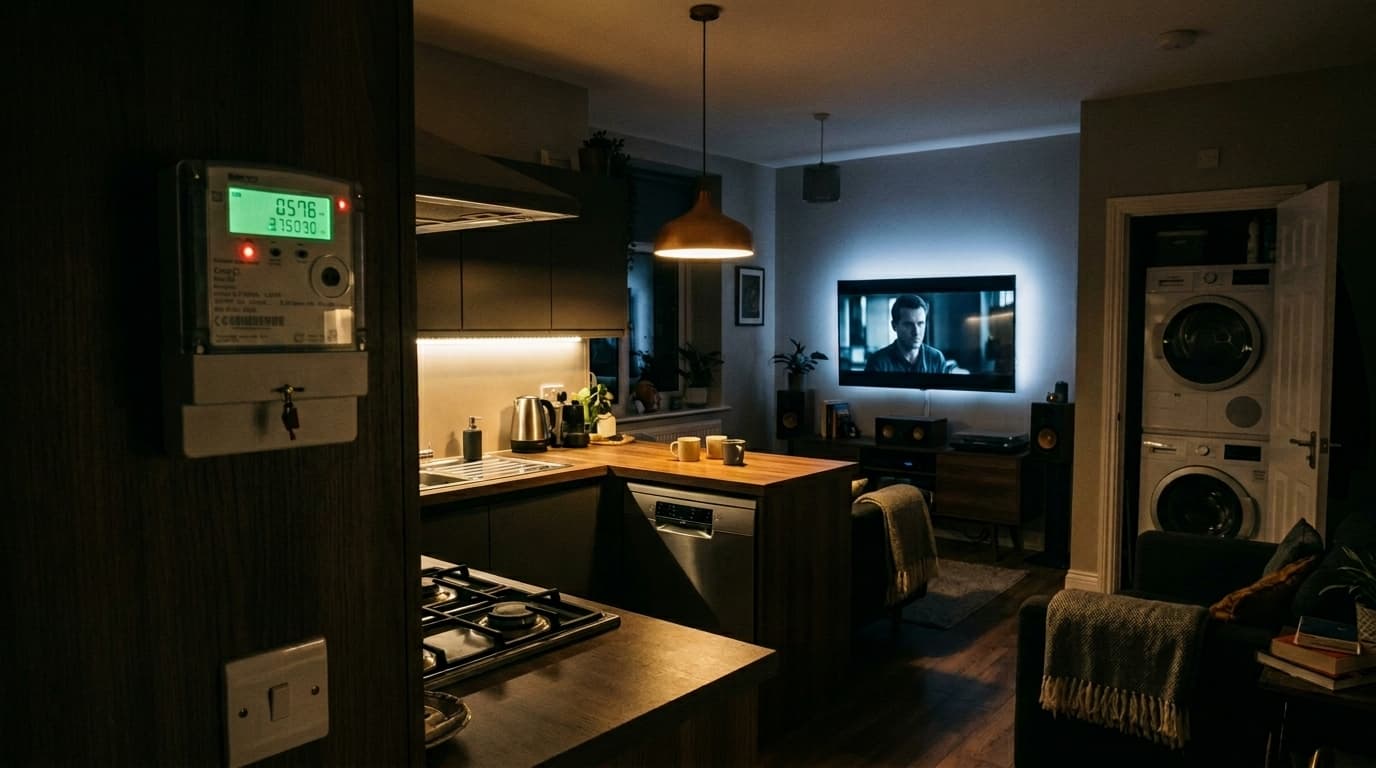
Your electricity bill is the sum of every appliance running in your home, but a small number of devices account for the vast majority of it. In many homes, the largest electricity loads are heating, cooling, water heating and drying, but the exact share depends heavily on climate, heating system, home size and appliance use. Everything else, phones, televisions, lighting, computers, contributes far less than most people expect.
This article breaks down typical electricity consumption by appliance category, gives you wattage and annual kWh figures you can use to calculate your own costs, and tells you where cutting back has the biggest impact on your bill.
The big picture: where your electricity goes
Before looking at individual appliances, it helps to understand the categories. The figures below are rough estimates for a household with some electric heating, cooling or electric water heating. Your own profile will vary significantly depending on how your home is heated and where you live.
| Category | Typical share of bill | Annual kWh (3-person home) |
|---|---|---|
| Space heating / cooling | 25 to 50% | 1,000 to 4,000 kWh |
| Water heating (electric) | 15 to 25% | 800 to 1,800 kWh |
| Washing, drying, dishwashing | 10 to 15% | 400 to 900 kWh |
| Fridge and freezer | 5 to 10% | 150 to 500 kWh |
| Cooking | 4 to 8% | 200 to 500 kWh |
| Entertainment and tech | 5 to 10% | 200 to 500 kWh |
| Lighting | 3 to 6% | 100 to 300 kWh |
| Standby and idle devices | 5 to 15% | 200 to 600 kWh |
All figures are estimates. The ranges are wide because household electricity use varies enormously depending on home size, climate, number of occupants, age of appliances, and whether heating is electric or gas. In countries where electric heating is standard, heating alone often accounts for more than half of annual consumption.
Heating and cooling
If your home is heated or cooled by electricity, those systems dominate your bill. No other category comes close in terms of raw energy consumption.
| System | Typical wattage | Annual kWh (estimate) |
|---|---|---|
| Electric storage heater (per unit) | 1,500 to 3,000 W | 500 to 1,500 kWh |
| Electric panel heater | 500 to 2,000 W | 300 to 1,200 kWh |
| Heat pump (whole home) | 1,000 to 5,000 W | 2,000 to 6,000 kWh |
| Air conditioning unit | 700 to 3,500 W | 400 to 2,500 kWh |
| Electric underfloor heating (per m²) | 100 to 200 W/m² | 50 to 150 kWh/m² |
Heat pumps are far more efficient than direct electric heaters. A heat pump delivering 3 kW of heating uses only 1 kW of electricity because it moves heat rather than generating it. This makes heat pump consumption look high in absolute kWh terms, but low relative to the heat delivered.
Air conditioning is the equivalent on the cooling side. A 2 kW AC unit running 6 hours a day for 90 summer days uses 1,080 kWh. At a typical residential electricity rate, that adds a significant amount to your annual bill. In hot climates where AC runs for six months or more, the figure is considerably higher.
Water heating
Electric water heating is the second-largest consumer in most homes that use it. A 3 kW immersion heater heating a 150-litre tank once per day uses approximately 1,200 kWh per year. Depending on your electricity rate, that represents a substantial part of your annual bill just to heat water.
| Appliance | Wattage | Typical annual kWh |
|---|---|---|
| Immersion heater (150 L tank) | 3,000 W | 1,000 to 1,500 kWh |
| Electric shower (daily, 8 min) | 7,500 to 10,500 W | 200 to 400 kWh |
| Instant hot water tap | 2,400 to 3,000 W | 50 to 200 kWh |
If you have solar panels, pairing them with an immersion heater diverter is one of the cheapest ways to reduce water heating costs. The diverter routes surplus solar generation into the hot water tank instead of exporting it to the grid at a low rate.
Washing, drying and dishwashing
The tumble dryer is typically the highest-wattage appliance in this category and the one with the most room for reduction.
| Appliance | Wattage | kWh per cycle | Annual kWh (typical use) |
|---|---|---|---|
| Tumble dryer (vented) | 2,000 to 3,000 W | 3.0 to 4.5 kWh | 300 to 450 kWh |
| Heat pump dryer | 600 to 900 W | 1.0 to 1.8 kWh | 100 to 180 kWh |
| Washing machine | 1,800 to 2,500 W | 0.5 to 2.5 kWh | 100 to 300 kWh |
| Dishwasher | 1,200 to 2,400 W | 0.8 to 1.5 kWh | 150 to 300 kWh |
Washing at 30°C instead of 60°C cuts washing machine energy use by around 40% per cycle. A modern dishwasher on an eco cycle often uses less water and energy than washing the same load by hand, especially when run full. Running both appliances off-peak if you are on a time-of-use tariff is an easy saving that requires no change in behaviour.
Kitchen appliances
Cooking appliances have high wattage but short run times, so their annual energy use is lower than most people expect.
| Appliance | Wattage | kWh per use | Annual kWh (typical) |
|---|---|---|---|
| Electric oven | 2,000 to 2,200 W | 1.0 to 1.5 kWh | 150 to 300 kWh |
| Induction hob (per ring) | 1,500 to 2,000 W | 0.3 to 0.8 kWh | 100 to 250 kWh |
| Microwave | 700 to 1,000 W | 0.05 to 0.15 kWh | 20 to 60 kWh |
| Air fryer | 1,200 to 1,800 W | 0.3 to 0.6 kWh | 50 to 150 kWh |
| Kettle | 2,000 to 3,000 W | 0.04 to 0.1 kWh | 50 to 200 kWh |
| Fridge-freezer | 100 to 400 W (cycling) | 24-hour operation | 150 to 500 kWh |
The fridge is unusual because it runs continuously. Even a relatively low average draw of 60 W around the clock totals 525 kWh per year. A modern high-efficiency fridge-freezer can use far less electricity than an older model. If yours is more than 10 to 12 years old, comparing its consumption against a current high-efficiency model is worth doing.
Induction hobs transfer 85 to 90% of their energy to the pan, compared to 40 to 60% for gas and 70 to 75% for traditional electric ceramic hobs. This means the same cooking task uses significantly less electricity on induction.
Entertainment and technology
This category draws far less power than most people assume, but it adds up because devices are in use for many hours per day.
| Device | Active wattage | Annual kWh (typical use) |
|---|---|---|
| Large TV (55 inch, LED) | 70 to 150 W | 100 to 220 kWh |
| Games console | 100 to 200 W | 100 to 300 kWh |
| Desktop PC | 100 to 400 W | 150 to 600 kWh |
| Laptop | 20 to 60 W | 30 to 100 kWh |
| Router / modem | 5 to 20 W | 44 to 175 kWh |
| Smart speaker | 3 to 15 W | 26 to 130 kWh |
A desktop PC with a monitor left on for 8 hours a day easily consumes 300 to 500 kWh per year. Switching to a laptop, which uses a quarter of the power, saves 200 to 350 kWh annually. Routers run 24 hours a day and are never switched off, so their low wattage still accumulates to 50 to 175 kWh per year.
Standby and always-on devices
Standby power is the electricity consumed by devices when they appear to be off but remain plugged in and drawing a small current. Most devices draw 0.5 to 5 W on standby. A few, particularly older set-top boxes, games consoles and desktop PCs, draw 5 to 15 W continuously.
For a typical home with 15 to 20 devices on standby drawing an average of 3 W each, the annual total is around 400 to 525 kWh depending on your exact mix of devices. At a typical household electricity rate, that can amount to a meaningful sum per year in electricity while the devices are not actively being used.
The devices with the highest standby draw are set-top boxes and cable receivers (often 10 to 18 W even when "off"), older games consoles (10 to 15 W), and desktop PCs left in sleep mode (5 to 15 W). Smart plugs with scheduling let you cut standby on these devices automatically without changing your habits. Use the Standby Power Cost Calculator to see what your standby is costing you annually.
CO2 impact depends on the electricity grid mix in your country, so any CO2 estimate should use an adjustable emissions factor rather than a single global figure. Countries with high renewable generation have significantly lower emissions per kWh than those relying on coal or gas.
Calculate your appliance running costs
Enter up to 8 appliances, their wattage and daily hours to see your exact daily, monthly and annual electricity costs.
Open Appliance CalculatorWhere to cut first
Not all savings are equal. Here is where to focus effort based on impact, ordered from highest to lowest:
1. Heating and cooling thermostat settings. Reducing your heating by 1 to 2°C or raising your cooling setpoint by 1 to 2°C saves more energy than almost anything else you can do. No cost, immediate effect.
2. Tumble dryer use. Air drying replaces every tumble drying cycle with zero energy. Even halving your dryer use cuts 150 to 250 kWh per year.
3. Water heating temperature and timing. A 60°C tank temperature is the standard recommendation for legionella safety. Going lower risks bacteria growth. But heating the tank only when needed, rather than keeping it hot around the clock, is a safe and significant saving.
4. Standby and always-on devices. A smart plug strip on your entertainment setup cuts standby for four or five devices with one button. Focus on set-top boxes, games consoles and desktop PCs first.
5. Washing temperature. Switching from 60°C to 30°C cycles cuts washing machine energy by around 40% per wash. Most modern detergents work equally well at 30°C.
6. Replacing the oldest, least efficient appliances. A fridge from 2010 using 450 kWh per year versus a modern model using 160 kWh saves 290 kWh annually. Payback on the new appliance, accounting for energy savings, is often 4 to 8 years.
Common questions
What is the single biggest electricity user in a home?
In homes with electric heating or electric water heating, those systems account for 40 to 60% of annual electricity use. In homes without electric heating, cooling systems and tumble dryers are typically the biggest users. The answer depends heavily on your climate and how your home is heated.
How much electricity does a fridge use per year?
A modern fridge-freezer uses 150 to 400 kWh per year depending on size, age and efficiency rating. A modern high-efficiency model typically uses far less than an older one from 10 or more years ago, which can use 400 to 600 kWh or more. Since the fridge runs 24 hours a day, replacing an old one with a current high-efficiency model often pays back within a few years in energy savings alone.
Does leaving things on standby use a lot of electricity?
Standby power typically accounts for 5 to 15% of a household electricity bill. The average home has 10 to 40 devices drawing standby power at any time. Individual devices draw 0.5 to 15 W on standby. Over a year, total standby consumption for a typical household is 200 to 600 kWh, costing roughly 50 to 150 euros or pounds depending on your electricity rate.
What is the cheapest appliance to run?
LED bulbs use just 8 to 12 W each. A phone charger uses 5 to 20 W while charging. Modern laptops use 20 to 60 W. These devices cost pennies per day even with regular use. The key difference between low-cost and high-cost appliances is wattage multiplied by hours of daily use.
How do I find out which appliance is costing me the most?
A plug-in energy monitor shows live wattage, daily kWh and estimated cost for any appliance. Plug it between the appliance and the wall socket. For whole-home monitoring, a smart electricity meter with a display shows total real-time consumption and historical data by hour, day or month. Most energy suppliers provide smart meters free of charge on request.